The Machine

The John Ellis LWM-5 Living Water Machine is $2,800. It is hand-built in the USA from stainless steel, ships in a 14″ x 14″ x 19″ box weighing about 14 lbs. Order online or call 845-754-8696, Mon–Fri 10am–4pm EST.

Experience the power of patented, UV-treated energized-distilled water crafted right on your kitchen counter.The John Ellis LWM-5 Living Water Machine is $2,800. It is hand-built in the USA from stainless steel, ships in a 14″ x 14″ x 19″ box weighing about 14 lbs, and carries a 6-month limited warranty. Order online or call 845-754-8696, Mon–Fri 10am–4pm EST.

Watch on Vimeo

What is Structured Water?

Structured water is water that has been altered at the molecular level so its hydrogen bond angle—the angle formed between two hydrogen atoms in a water molecule—is wider than that of ordinary tap or bottled water.

Ordinary tap water has a hydrogen bond angle of approximately 104°. The John Ellis LWM-5 utilizes a patented steam-distillation process featuring repeated heating and cooling cycles combined with UV treatment to widen that angle to 113.8°–114°. This molecular change remains permanent after cooling.

Note: “Structured water” is a proprietary term tied to our patented physical transformation process, not a generic classification.

Key Machine Features & Output

John Ellis Water Machine LWM-5 Diagram
  • Output Capacity: Yields 1 gallon of energized-distilled water in approximately 2 hours.
  • High Volume Tap Water: Produces up to 10 gallons/hour of energized tap water (ideal for wells or mixing).
  • Patented Recycling: Recycles water hundreds of times per gallon, unlike basic standard distillers.
  • UV Germicidal Protection: Built-in ultraviolet lamp and transformer in the boiler destroy waterborne organisms during cycles.

How to Set Up & Use Your Machine (Step-by-Step)

  1. Setup Location: Position the machine securely on your sink counter space.
  2. Attach Diverter Valve: Snap the included quick-connect diverter valve directly onto your faucet spout.
  3. Position Collection Vessel: Place a glass container or stainless steel pot inside the sink basin to receive output.
  4. Connect Feed Line: Water flows seamlessly through a ¼-inch line controlled by a built-in butterfly valve.
  5. Calibrate Flow: Slightly turn the butterfly valve to feed water automatically—no manual refilling necessary.
  6. Collect Energized Water: Excess non-distilled water routes via a second line into the sink, producing high volumes of energized tap water.

Portability & Technical Specifications

Designed for versatile portability, the primary unit weighs only 4 pounds without the air cooler unit.

Boiler Assembly

  • Design: Quick snap-apart heater module
  • Power Output: 1500 Watts
  • Safety Mechanisms: Dual thermal protection switches

Faucet Diverter & Legal

  • Filling System: Continuous automatic feed system
  • Intellectual Property: Protected by 13 U.S. and foreign patents

Frequently Asked Questions

What is a hydrogen bond angle, in plain terms?

Every water molecule (H₂O) consists of two hydrogen atoms bonded to a single oxygen atom. The angle formed between these two bonds is known as the hydrogen bond angle.

While standard tap water measures around 104°, the LWM-5 expands this angle to 113.8°–114° through continuous thermal recycling and UV exposure. Independent testing verifies this measurable physical change via electrolysis.

How John Ellis Water Machines Work

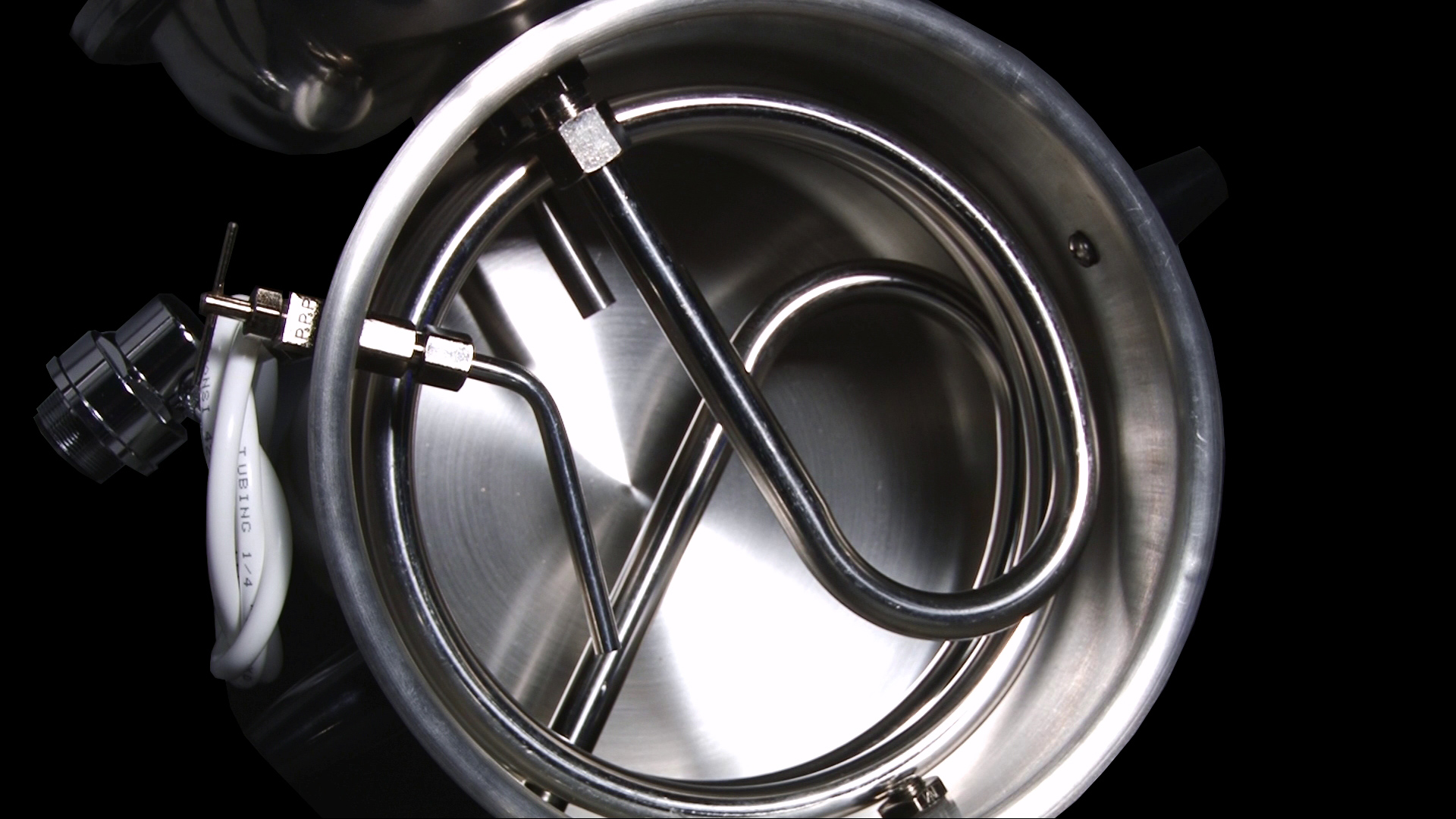
The abstract of the world wide patents explains in general the thrust of the patents. However, the details of how it works are described in the body of the patent. All the patents provide this description which can vary from country to country. The enclosed is from the Australian Patent Number 2001255180.Inside of a John Ellis Machine
The Process, Step by Step

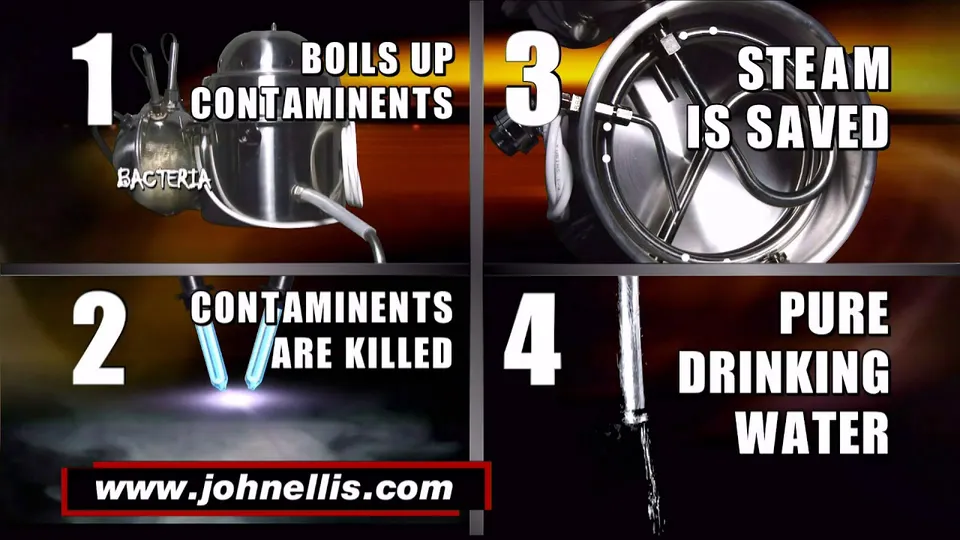
Step 1: Small-Batch Heating

This method applies extreme heat and ozone concentration to relatively small volumes of water — only 1 1/2 cups at a time, about 3 times per minute. Common sense says this is more effective than passing a large volume of water by an ozone bulb just once. If you use a large volume of water at a time, it won’t work as indicated using these parameters.

Step 2: Ozone Exposure from a Quartz Bulb

Ozone is generated using a special quartz bulb, not corona discharge, which produces unwanted nitrides. As the small batch of water is brought to a foaming boil, bacteria are frothed to the surface where they’re exposed to this ozone. A small amount of water is exposed at a time for maximum effectiveness.

Step 3: Heater Cycling

When enough boiler pressure builds up, the steam pressure forces the boiler water back into the condenser tank to be recycled. This causes the heaters (there are two) to temporarily come out of the water, exposing the bacteria that has been frothed to the surface to even higher temperatures.

Step 4: Repeated Hundreds of Times per Gallon

This heat-and-ozone cycle repeats about 3 times per minute. Since a gallon of energized distilled water takes about two hours to produce, the water is exposed to extreme heat and ozone repeatedly — hundreds of times per gallon.

Step 5: Why Repetition Instead of Continuous Boiling

It should be remembered that all water is different, and tests done under lab conditions won’t always produce the same results because water conditions vary. That’s why this repetitive method uses two different modalities — heat and ozone — rather than one continuous pass.

Since all water is different, “Guaranteed Pure Water” is an outrageous statement for an ordinary water distiller using continuous boiling to make. What if the water has trace amounts of detergents? The extreme frothing and pollutant “carryover” can only be stopped by stopping the boiling, as this process does. In fact, it was the U.S. Patent Office that asked us to run the York Lab tests to prove that stopping the boiling produces purer water — which is also why ordinary continuous distillers can’t go below 0.1 PPM TDS.